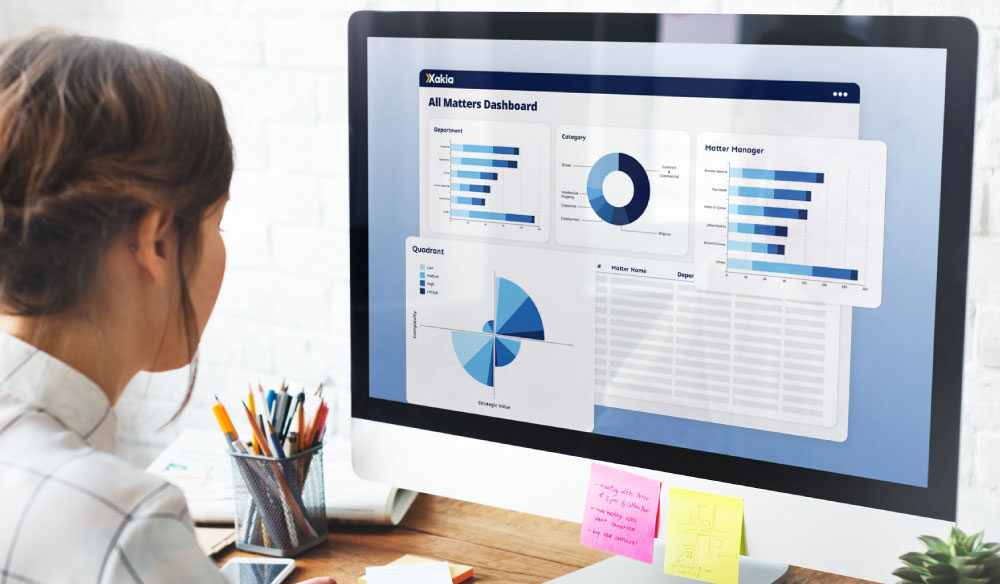
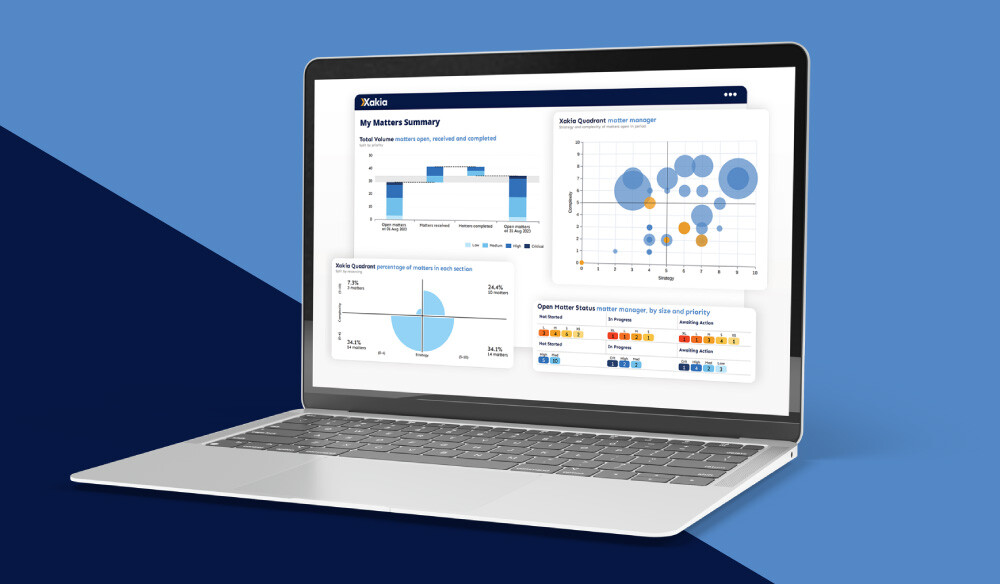
This Legal Data Analytics for Beginners eBook exists to make legal data analytics accessible for Legal Departments of all sizes and lawyers of all backgrounds.
We'll show you how to collect, apply and share legal data analytics. Download our guide now to learn how to get started in legal data analytics.
Download the white paper now
It's time to use legal data analytics to demonstrate the value of the Legal Department to a business!
Legal data analytics should be accessible for Legal Departments of all sizes and lawyers of all backgrounds
The phrase 'legal data analytics' can be quite daunting for corporate Legal Departments.
So, let’s put it into words lawyers use all the time: what are the facts?
Put simply, 'legal data analytics' are the facts and evidence about what you and your in-house Legal Department are doing. Nothing more complex than that.
If you're new to legal data analytics, we're excited for you! There is so much potential for you and your in-house corporate legal team once you properly understand what you are actually doing, and who you are doing it for.
This eBook will guide you on the 'who, what, when, why' information you need, including how to collect it, how to apply it and how to share it with relevant stakeholders with legal analytics software.
In other words, just the facts.
Put simply, 'legal data analytics' are the facts and evidence about what you and your in-house Legal Department are doing. Nothing more complex than that.
The case for legal data analytics
It can be difficult for in-house legal teams to find the time and energy for strategy and organization when it comes to corporate Legal Department information and data.
But the benefits of being able to successfully collect, apply and share the legal data with the help of legal analytics tools can aid in resolving departmental pain points and improving productivity.
If you're feeling the pain:
You are overworked
Your work isn't necessarily the most strategic - just the most urgent
Your information is disaggregated
Simply tracking “who’s doing what” means sifting through old messages, spreadsheets, Word documents, myriad law firm portals... or worse, what’s stored only in your colleagues’ memories
What should be a straightforward quarterly report takes hours of trolling through a dozen information sources
In-house corporate Legal Departments who use analytics to inform their decision making, show higher work quality, reduced litigation cost and lower spending.
Source: Gartner
What's the point of legal data analytics?
The concept of collecting, analyzing and acting upon data can be daunting for a team that’s accustomed to Word-based manual reporting or a smorgasbord of spreadsheets.
Here are just a few ways legal analytics software can help your Legal Department:
Prioritize work
Allocate resources more efficiently
Identify work that should be automated, eliminated or managed elsewhere
Ensure appropriate staffing and workloads
Manage the legal budget and allocate costs to business units
Handle external law firms, including fees, deadlines and quality
By quantifying and sorting the work, its risk profile, complexity, resource demands and more, you can measure whether you are getting the right results. When the answer is no, you can adjust accordingly.
Data empowers you to stop acting on anecdotes and hunches, and start making well-informed, proactive decisions.
How can legal data analytics help my in-house Legal Department?
There are many benefits to legal analytics, including:
Provide a quick, visual understanding of critical Legal Department data points
Be client-centric and prioritize accordingly
Easily identify and plug efficiency gaps
Report to key stakeholders with confidence using legal analytics tools
Make decisions informed by solid data
Manage and track success of specific initiatives
I wanted more visibility and insight into the entire portfolio of matters, with an interest in making sure people were spending our limited in-house legal resources on the right projects.
The mechanics of legal data analytics
It can be tricky to know where to start, especially if you've been running your legal analytics on anecdotal reporting or across a number of different platforms. But before you can analyze the data and before you can act on the data, you must actually collect the data.
You can collect and crunch this data using a couple of different methods:
That's why we created this beginner's guide to legal data analytics.
We've identified what data points will be most helpful and actionable and the various methods you can use to collect and crunch the data. It's easy with an in house legal department software - it's all done for you!
Implementing a successful data strategy
Whilst every corporate Legal Department is different, the fundamentals of legal data analytics are universal. We've identified that a successful data program covers four key factors behind your legal matters. Once collected and interpreted, these metrics will help make your legal department be more productive, more valuable to the C-suite, and far less stressed.
Our eBook delves deep into the best practice approach to creating a straightforward legal data analytics strategy and its implementation.
While better management of capacity, capability and cost is helpful within the corporate Legal Department, there’s another important benefit of legal data analytics: it can demonstrate the value of your legal team to the business.
As in-house counsel, you have tremendous value. It’s time to use legal data analytics to prove it.
Download our guide to in-house legal data analytics for beginners now
Our mission is to make legal data analytics accessible for in-house legal departments of all sizes. You don’t need a big legal department to implement a data program, or a background in math, science or engineering and you don’t need to find another batch of hours in your day. It's easy with legal analytics software!
Complete the form and download our eBook now to get started.
Download the white paper now
Get the matter management your team deserves — without the price shock.